5G Revolution: Unleashing New Mobile Possibilities in 2026
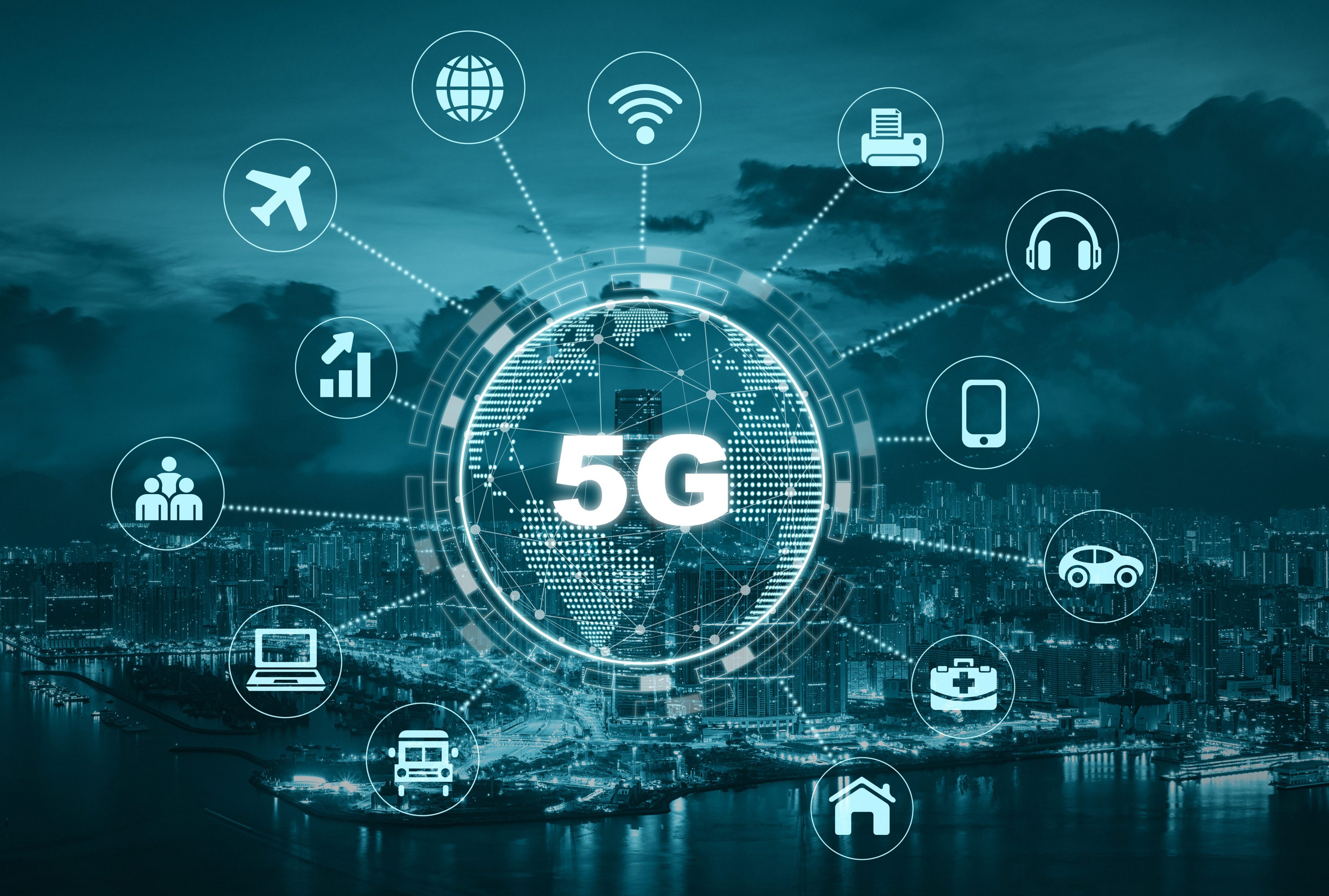
The global rollout of 5G has reached critical mass in 2026. For years, we spoke about 5G in terms of "faster downloads," but the reality for mobile developers is far more profound. We are no longer just building "apps"; we are building distributed, real-time systems that rely on 5G's ultra-low latency and massive device density. At Sarankar Developers, we've shifted our entire architectural philosophy to leverage this new infrastructure.
1. The Fundamental Shift: From Device-Centric to Edge-Centric
Historically, mobile development was a battle against local constraints: CPU power, battery life, and storage. Developers spent 40% of their time optimizing code to run on mid-range hardware. 5G and Multi-access Edge Computing (MEC) have changed the math.
Edge computing moves the heavy processing (like AI inference, video rendering, or physics calculations) to servers located physically close to the user—often within the same 5G cell tower. Because 5G can provide a round-trip latency of under 10ms, the user cannot distinguish between a calculation happening on their phone and one happening at the edge. This allows us to deliver high-fidelity experiences to even the most budget-friendly devices.
Key Technical Advantages of 5G MEC:
- Extended Battery Life: By offloading high-CPU tasks to the edge, the device's processor stays idle, significantly reducing heat and power consumption.
- Instantaneous Updates: Large assets can be streamed in real-time rather than downloaded during a long "Update" screen.
- Enhanced Privacy: Data can be processed at a local edge node and discarded before ever reaching a central cloud server, minimizing the data's travel time and exposure.
2. The Death of the Loading Spinner
In 2026, a "Loading..." spinner is a sign of a poorly architected application. With 5G speeds consistently exceeding 1 Gbps, the bottleneck is no longer the network; it's the application's synchronization logic. Users now expect what we call "Zero-Latency UI."
To achieve this, developers must move away from traditional REST API patterns where a user clicks and waits for a response. Instead, we use "Optimistic UI" combined with high-frequency WebSockets. The app predicts the success of an action locally, and the 5G network confirms it so quickly that the reconciliation is invisible to the user. This is particularly crucial in FinTech and Real-Time Collaboration tools where perceived speed equals trust.
3. Case Study: AR/VR and the 5G Link
Augmented Reality (AR) has been the biggest benefactor of 5G. Previous AR apps often felt "jittery" because the device had to process the camera feed, identify objects, and render 3D models simultaneously. With 5G, we can use "Split Rendering." The mobile device handles the light-weight camera tracking, while the edge server renders the complex 3D shadows and textures. The result is a seamless, photorealistic AR experience that stays pinned to the real world with sub-millimeter precision.
4. Massive IoT and the "Connected Everything"
5G is designed to handle up to 1 million devices per square kilometer (compared to just 60,000 for 4G). For developers, this means the "Internet of Things" (IoT) is moving from a hobbyist niche into enterprise reality. Whether it's a smart city project in Bhopal or a smart warehouse in Europe, mobile apps are now the primary dashboard for thousands of simultaneous data streams. Developing for 5G means learning how to handle high-concurrency data ingestion without crashing the mobile UI thread.
Conclusion: Building for the Next Billion Users
As 5G becomes the baseline standard, the apps that succeed will be those that treat the network as an extension of the device's hardware. At Sarankar Developers, we are at the forefront of this transition, ensuring that our clients' products are ready for a world where "offline" is rare and "instant" is the standard.
Ready to build a 5G-ready application?
Our engineering team specializes in ultra-low latency architectures and edge-computing integration. Contact us at pratham@sarankar.com for a technical consultation.

Written by Pratham Sarankar
CEO at Sarankar Developers. Flutter expert and monetization strategist with 4+ years of experience in building high-performance mobile applications.